Special Edition: We Answer Readers' Questions about Writing
February 9, 2026

Today’s Contents:
Writer’s Quote: Nathaniel Hawthorne on the importance of making writing look easy.
Q: If I’m stuck at a particular point in my novel, is it okay to jump ahead and come back to the sticking point later?
Q: How do you know when to stop revising and move on? I sometimes feel like I’m over-revising, making it worse.
Q: Can I get sued if I use the names of real people in my novel?
Troubling Tropes: Three silly tropes in the otherwise fun film Send Help.
10 Resources for Writers: Good stuff for writers.
Do you have a question about your writing? Post it in the Comments section or send us an email at writingthatmoves21@gmail.com and we’ll give you an answer.
Don’t forget to enter our poetry contest. Deadline: March 1. For information click here.
Writer’s Quote
Easy reading is damn hard writing.
Nathaniel Hawthorne, American author of The Scarlet Letter
You will find variations of this quote from most professional writers. What they’re saying is that the goal is usually to write a novel or story that flows so smoothly and is so accessible that it doesn’t seem written at all. When the writer is able to achieve this Holy Grail, the reader is fully immersed in the characters and plot, living in the world you’ve created as comfortably as if they were born to that world. It is a literary Airbnb.
Often this is accomplished when the author creates a protagonist so powerful, so honest, so compelling that we never want to leave their side. When that happens, all awareness that this is fiction or that there is even a writer behind it disappears. Readers have felt that way about J.D. Salinger’s The Catcher in the Rye, Alice Walker’s The Color Purple, and more recently Maria Semple’s Where’d You Go, Bernadette and Richard Osman’s The Thursday Murder Club.
When a reader finishes a novel like this, they often think that the writing is so natural and believable that it must have just come rushing onto the page in torrent of unstoppable words. What every good writer knows is that it takes a lot of technique and anguish to make the story seem so easy. The writer must avoid showing off and instead appear to slip into the shadows so the book can breathe without them breathing on the necks of the reader. The hardest lesson I learned—and the most important—was that the novel is the star, not me. Everything must be done in service of pulling the reader into the story and making them never want to leave. We are servants in the employ of the novel.
The more you learn about the craft and techniques of writing, the more you increase your chances of writing a novel that embeds itself into the hearts of the readers.
Readers’ Questions Answered
Q: If I’m stuck at a particular point in my novel, is it okay to jump ahead and come back to the sticking point later?
from Eric D

A: As tempting as it is, Eric, I advise against jumping ahead to work on subsequent chapters until you resolve the problem that is causing you to be stuck. Here’s why: There’s a reason you’re stuck but your conscious mind hasn’t worked it out yet. The unconscious writer is telling you there’s something that needs to be addressed: maybe it’s the plot, maybe it’s the characterization, maybe it’s the setting. But whatever the resolution is may change the trajectory of your story.
If you jump ahead and start working on future chapters, you’re cementing elements that might be the very thing that needs changing. For example, what if the reason you’re struggling is that you want your character to be a finance officer at a bank. The issue might be that you want the character to be in what they consider an oppressive job, but the bank setting might feel like a stagnant setting to write about. However, if you change the character’s profession to a travel agent who is hustling for business in a world where everyone can book everything themselves online, you’ve added a layer of desperation. Plus, we can learn interesting insider things about the travel business that enhances the story. Or they could be a beleaguered high school principal with deep budget cuts trying to keep the faculty, students, and parents all happy.
If you jump ahead and keep writing about the character and the bank setting, you’ve invested too much time and effort to back down and now you’re stuck with a profession that you should have changed.
Don’t get caught up in the need to produce pages if those pages add to the problem rather resolve it. Sometimes in writing you need to hunker down and try different solutions. When I’ve faced this problem of feeling stuck, I sometimes go back to the beginning and polish all the pages again. This can create a momentum—like a running start when you need to jump across a creek or gap—that carries you forward. If that doesn’t work, I will sometimes change the character’s gender, the verb tense, the character’s backstory, the weather, or add a new plot element (an injury that affects the protagonist and those around them). I often try many variations of these before something clicks and I’m excited about the writing again.
BOTTOM LINE: Fix the problem before jumping ahead or you may end up never resolving the problem, just burying it so you can complete pages.
Q: How do you know when to stop revising and move on? I sometimes feel like I’m over-revising, making it worse.
from Yusef H

A: In 1933, French poet Paul Valéry wrote what would be eventually become this famous but distilled quote: “A work is never finished, but abandoned.” Here’s a translation of his more complete and accurate writing:
In the eyes of those who anxiously seek perfection, a work is never truly completed—a word that for them has no sense—but abandoned; and this abandonment, of the book to the fire or to the public, whether due to weariness or to a need to deliver it for publication, is a sort of accident, comparable to the letting-go of an idea that has become so tiring or annoying that one has lost all interest in it.
The shorter version has been used by writers (and teachers of writing) ever since to assure beginning writers that it’s okay to stop obsessing over perfection and move on. The problem is that, at the same time, we are preaching to gospel of “Polish! Polish! Polish!” What’s a poor writer to do?
Polishing is a two-step process. Some writers ask if they should just hurry through their first draft, get to the end, and then begin the polishing process. Absolutely not! Polishing in writing isn’t like polishing a car or silverware. Those items are already complete and polishing just adds a nice sheen. Polishing in writing is part of the creative process that forms the thing itself. Constant revising is how the writer discovers the layers of depth to their characters, plot, and theme. It’s also how they sharpen their style so the story has the most impact.
However, having proselytized so fervently about revising/polishing, I know that this can also become an excuse for not moving forward. Writers have to acknowledge that “This is the best I can do at this time.” And then move on—to the next page, the next chapter, the next book.
On occasions when I’ve had to read a passage from any of my past novels, I’ve cringed in embarrassment. The few times I find a passage that I think is good, I have no memory of writing it—and usually think it’s too good to have been written by me. Yes, I sometimes think about going back and rewriting those books so they are better. But what’s the point? That was the best I could do then. I’m much better now. Yet, years from now if I am forced to read a passage from a novel I’ve just completed, I will undoubtedly cringe at the lameness of the writing.
Finally, there is the fear of finishing because once you declare the work done, the next step is for people to read it and give reactions which are now outside your control. Famous bestselling writer Erica Jong put it well: “I went for years not finishing anything. Because, of course, when you finish something you can be judged.” Ironically, writing is creating something that you want others to judge, but are also fearful of their judgement. If you want to be a writer, you must learn to live with the judgement of others. You don’t have to believe them, though.
BOTTOM LINE: If you think you’ve written the best pages you can do at this time, stop tinkering and move on to the next pages. You will have another chance when the story is done and you do a final polish. But even then, you must declare the work finished and move on to the next book.
Q: Can I get sued if I use the names of real people in my novel?
from Sarah J

A: First, a disclaimer: Anyone can sue anyone over anything at any time. That doesn’t mean they can win, but they can cause discomfort. Plus, I’m not a lawyer and can’t offer legal advice. However, there are a few common practices that writers go by.
There are two kinds of “real people” in fiction: (1) a celebrity who is well known in popular culture and (2) a non-celebrity person the writer knows or who has heard of and whose real name they want to use, either in friendship, hostility, or for the sake of realism.
Celebrities as Characters in Your Novel
In general practice, writers can populate their novels with real celebrities as much as they want. This includes political figures as well as actors or other notorious figures. [Caution: This does not apply to fictional characters that are still under copyright protection.] Characters representing Richard Nixon, Howard Hughes, George Bush, Marilyn Monroe, etc. have all appeared in novels and movies. I had Stephen King appear in the ending of one of my recent novels, Assassin’s Apprentice (which is serialized right here). A fictionalized version of author George Saunders (who also has a Substack newsletter) appeared in HBO’s TV series Lucky Hank. Quentin Tarantino used many actual people in his novel and movie Once Upon a Time in Hollywood, even completely changing what factually happened. Other novels that fictionalize celebrities include Joyce Carol Oates’ Blonde (Marilyn Monroe), Stephen Volk’s Leytonstone (Alfred Hitchcock), and John Connolly’s He (Stan Laurel). Colin Firth appears in Helen Fielding’s Bridget Jones: The Edge of Reason (Firth played a character in the movie adaptation of Bridget Jones’ Diary). So meta.
Using the Real Names of Non-Celebrities in Your Novel
Avoid it. Sure, maybe you want to give a character the same name as your best friend, romantic partner, or friendly neighbor. Resist the urge. There is no anticipating their reaction to your character. Many writers have fallen out with—and been sued by—people who they thought would be honored or flattered by having a character using their name. I’ve named characters using the first names of my children. I think I’m on safe ground there. But I wouldn’t risk it with others.
Definitely don’t use full names of people you have a grudge against because you want to humiliate them by naming a horrible character after them. You could get away with a common first name—like Mary or John—but a unique name—like Charity-Rose or Caspian—could lead to trouble. Again, it’s unlikely anyone could win a lawsuit because of it, but it could cause you inconvenience, aggravation, and legal fees.
BOTTOM LINE: Feel free to discuss celebrities in your novel, or even have them as characters, as long as they are relevant to your story, such as setting the tone or time period. Where you could get in trouble is disparaging a celebrity in such a way as to reduce the commercial value of their name. If you write a novel in which you have a living president of the United States secretly running a group of pedophiles, you could be crossing a legal line. However, there is more latitude when a work is considered a satire.
Troubling Tropes: Send Help.
Tropes are familiar events or circumstances that appear over and over again, especially in genre writing. The challenge is to make them believable and original.
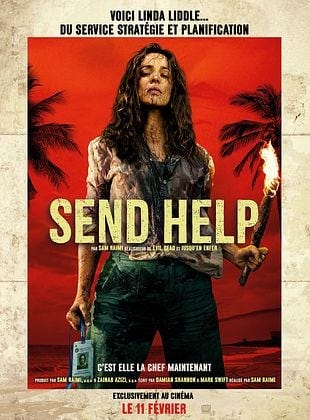
Send Help is a fun psychological thriller from Sami Rami (Evil Dead, Spider-Man) staring Rachel McAdams and Dylan O’Brien as a put-upon employee and her horrible boss whose private jet plunges into the ocean, leaving them stranded on a deserted island. As much as I enjoyed the movie, and am a Sam Rami fan, there were three troubling tropes.
Washing ashore unconscious. It’s a familiar story point in countless movies and TV shows that a character’s boat sinks (or plane crashes into the ocean) and they wash ashore unconscious. Actually, if you lose consciousness in the ocean, experts say you will drown within two to six minutes. Even if you remain conscious, hypothermia will kill you within an hour or two. Sure, it’s convenient for the writer to use this device, but a really good writer would make this survival believable rather than rely on an unbelievable cliche.
A handy knife within reach while getting choked. I covered this in a previous article (“The Convenient Weapon”). This is when a character is getting choked and they reach out, feeling along the ground or counter or desk, and conveniently find a sharp object to stab their assailant (or a hard object to hit them in the head). Again, lazy writing from the unimaginative.
Looking at the camera. Breaking the fourth wall is when a character looks directly at the camera to acknowledge the audience. Deadpool does this a lot. Becky Sharp does it in the 2018 TV adaptation of Vanity Fair. It can be a very effective means of adding another layer to the story. However, when the character does this at the end of Send Help, it makes no sense. It doesn’t add anything and therefore seems like a gimmick that takes us out of the movie.
10 Resources for Writers
Brandon Sanderson shares writing tips to stay productive, professional, and ‘progress-motivated’
‘Talent can be a great hindrance … It’s really about endurance’
What is the Socratic Dialogue Technique? Definition & Examples
We only exist because of paid subscribers. Wouldn’t you like to be one of those?