Guest Column by Norman Leonard & Henry Miller’s 11 Writing Tips (Annotated)
April 20, 2026

Today’s Contents:
Guest Column: Writer Norman T. Leonard discusses how fiction genres are just reflections of our everyday lives.
Henry Miller’s 11 Writing Tips (Annotated): Popular and controversial writer Henry Miller’s tips for writing—with my helpful commentary.
5 Resources for Writers: Good stuff for writers.
Special Announcement: The Novel Is Back, Baby!
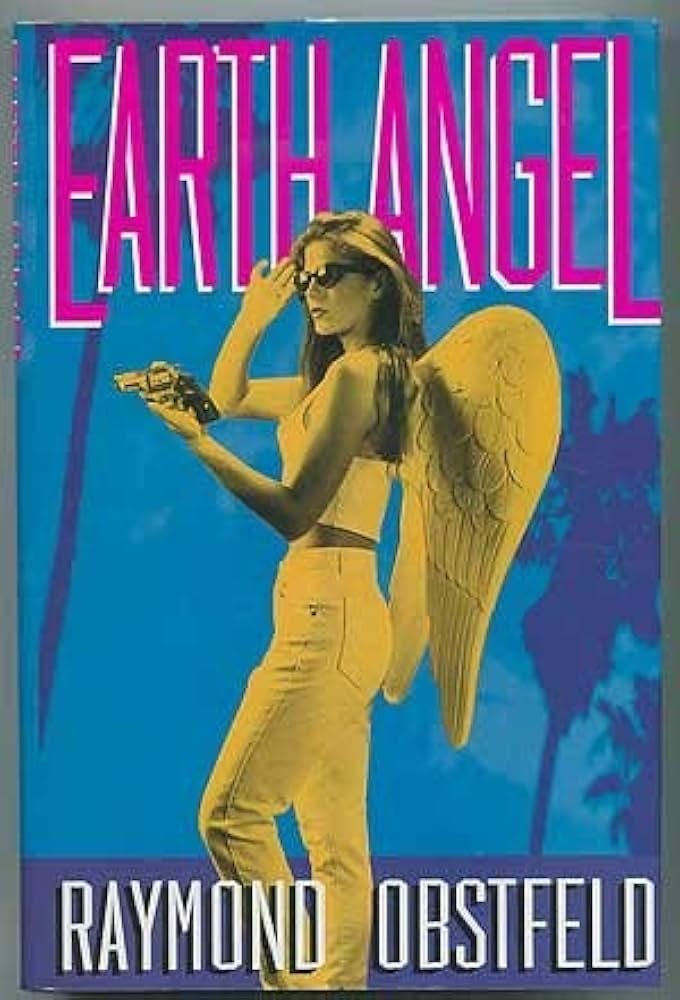
Writing that Moves started as a place to serialize novels just like they did with Charles Dickens, Sir Arthur Conan Doyle, Alexandre Dumas, Harriet Beecher Stowe, and H.G. Wells. We’ve posted two complete novels so far: The Hour Thief and Assassin’s Apprentice. In May, we will be serializing Earth Angel. Amazon’s description is pretty good, so here it is:
In one freak, tragic instant, Season Gottlieb, M.D., finds out how quickly "having it all" can turn to absolute dog crap. When her wedding to Tim, a hardworking fellow doctor, is only two weeks away, her would-be groom snaps. Before the cops gun him down, Tim has sprayed her southern California clinic with bullets, leaving behind a half-dozen dead bodies and the wreckage of Season's world.
From its ashes arises her nutsy, well-meaning, deliriously inventive plan to put her life together again: Season will make amends to the families of Tim's victims by becoming their guardian angel.
The results are catastrophic, unexpected, and fiendishly funny - for Season as an angel is not what the doctor ordered. Her attempts will get her black-mailed, labeled a lunatic, and arrested. In fact, she's nearly ready to quit when she arrives at the Santa Barbara home of David Payton and his two adopted teenagers determined to change their lives, whether they want them changed or not.
With a psycho serial-kidnapper loose in town and with Season's secrets catching up with her, she's on a roller-coaster ride to thrills, chills, and big-time trouble...and thank heaven, she's taking us along for the racy, joyous ride.
Today’s Guest Column
I’m excited to launch our inaugural guest column with my dear friend and a writer I admire immensely, Norman T. Leonard. His column is a funny, touching, and insightful analysis of how our daily lives match most writing genres. His witty and intelligent perspective will make us all better writers—and better people.
Norman T. Leonard is a storyteller, doting husband, proud father, amateur zookeeper, wayward woodworker with a few too many scars, guitarist and songwriter for The Moon Wobbles, oddities enthusiast, and passionate hater of small talk.
Building a Better Spaceship
by Norman T. Leonard

Genres are funhouse mirrors. I read horror for the scares, yes, but also because that fear is eerily familiar. I enjoy a good meet-cute in a romantic comedy, but what I really love is the characters’ vulnerability, which is terrifying and inspiring (maybe I’ll dangle my heart over the void like that?). Genre works because it distorts and magnifies what we all feel—hope, shame, longing, dread. And for us storytellers, that’s the shortcut—emotion. To wit:
Alienation → Science Fiction
Fear → Horror
Grief → Haunted House
Vulnerability → Romantic Comedy
Dread → Thriller
Anger → Revenge
Resilience → Western
Epiphany → Coming-of-Age
When my life is spiraling out of control, I immediately think of Aristotle and fatal flaws. And then I look back at my decisions, those moments when apathy overshadowed my heart, insecurity hobbled my conviction, or selfishness impeded my compassion, and I pivot. At least I try to. I’d much rather own up to my doe-eyed naivete in a coming-of-age story than tragically kill my father, bang my mother, and live the rest of my life in literal and/or spiritual blindness. In this way, knowing the patterns and expectations of genre have real-world utility.
In the middle of junior high, I transferred schools, this on the heels of my parents’ divorce, which should have had its own reality show on Animal Planet. On top of our family carnival, I was stocky, shy to the point of mute, and I loved reading, all of which made me an easy target for anyone in my school district. I felt so out of place, I was certain I was a different species.
The jump from getting pubic hair to becoming a werewolf is a short (and curly) one.
In fact, “different species” was the language I used when journaling about this time in my life. A few quick word associations—different… misunderstood… alien…—and my junior high experiences snapped into focus as science fiction. With the genre table set, I cozied up to my junior high self and started asking questions:
“Why do you feel like an alien?”
“I don’t have any friends.”
“Why do you think that is?”
“I’m different, I guess.”
“What are you doing about it?”
“I’m gathering parts to build a spaceship.”
“Where will you go?”
“Maybe… some place where people don’t hate me.”
And there we go, I have a story that basically wrote itself. I’ve got a character who’s easy to care about—feeling misunderstood is pretty universal. The character has a goal—to build a spaceship. The character has a need—to love himself and to be loved. And there are any number of obstacles I can put in his path—bullies, skeptical adults, the outcast girl who crushes on our hero (even though he’s too insecure to realize it).
Puberty as horror? The jump from getting pubic hair to becoming a werewolf is a short (and curly) one. The jump from acne to zombies is even shorter. Puberty wasn’t any easier on me than it was on anyone else, and the horror material runs deep, as evidenced by menarche in Carrie, chest hair in Teen Wolf, and sexual awakening in It Follows.
There’s also my bouts with depression, those stretches where I feel broken, and a cynical film hangs over everything. Cold and corrupt, all these moments ache and burn for a hardboiled crime treatment. The crime? Not sure yet, but I know from my depression dance card that it feels like somebody wants me dead, and that’s a pretty great place to start. As far as the usual suspects go, there’s no shortage of personalities I can draw on to populate a police lineup: the junior high bully who smashed my teeth into the spigot of the water fountain; every highway patrolman I’ve ever met; or my junkie aunt who drugged me in the mall and tipped a sales clerk to watch me while she shopped. It takes little creative energy to imagine rounding these turds up in the third act, laying out all their felonies and misdemeanors, one-upping them with wit, cunning, and a world-weary soliloquy as I pin the ultimate crime on my deadbeat dad who, I must confess, fleshes out a mob boss pretty nicely.
Speaking of Absurdism, raising my kids has offered infinite storytelling opportunities, particularly in the Western genre.
In marriage, I’ve been fortunate (and industrious—my wife and I put in the work) so there’s not a lot of conflict to draw on. Before I was married, though, I spent a brief time on the dating scene. Few things prepare someone to write Absurdism like dating. Roughly 1 in 100 people are psychopaths. I imagine that percentage greatly increases if we’re talking about single people. The pursuit of romance and companionship is fertile ground for nonsensical dialogue, circular plotlines, and existential angst galore. Any person who has swiped left, right, or otherwise knows what it’s like to Wait for Godot and can put their spin on that Absurdist yarn. Eternal Sunshine of the Spotless Mind, Seinfeld, The Lobster, Portnoy’s Complaint—all have heartbeats, irregular though they may be.
Speaking of Absurdism, raising my kids has offered infinite storytelling opportunities, particularly in the Western genre. Every parent knows that kids aren’t really human beings—they’re livestock that must be herded, fed, and protected against all manner of wildness and savagery. And laws? Good luck enforcing laws against a willful toddler. I’m pretty sure High Noon was written by a father who knew nap time was imminent.
Just before I became a father, I attended labor and delivery classes with my wife. The entire experience fascinated me, and my wife’s body became even more epic in my mind than it already was. It became epic in terms of genre—tall tale, Old Testament-epic. I wrote a story about a woman whose pregnant belly grew to the size of a small mountain, and when her water broke, it flooded and drowned the entire village, which was populated by cruel, judgmental hypocrites. It was probably sacrilegious to write my own Book of the Bible, but you can’t perform miracles without offending the money changers.
Of course, these examples are filtered through my lens. Your lens is probably—hopefully—different. And that’s good. One person’s belly laugh is another’s slasher-induced scream of mortal terror. Leverage genre. Build a spaceship. Arm yourself for the zombie apocalypse. Or drift off in a hot air balloon and give your younger self the meet-cute you deserve.
Norman T. Leonard’s other writing can be found here:
Here’s the link to his collection of short humor, All Kinds of Funny and Other Serious Matters, Volume 1.
Here’s the link to his family-friendly fantasy adventure podcast, Cobbler’s Gulch.
And here’s where you can find him and his (mostly) humorous stories: allkindsoffunny.com.
Henry Miller’s 11 Writing Tips (Annotated)
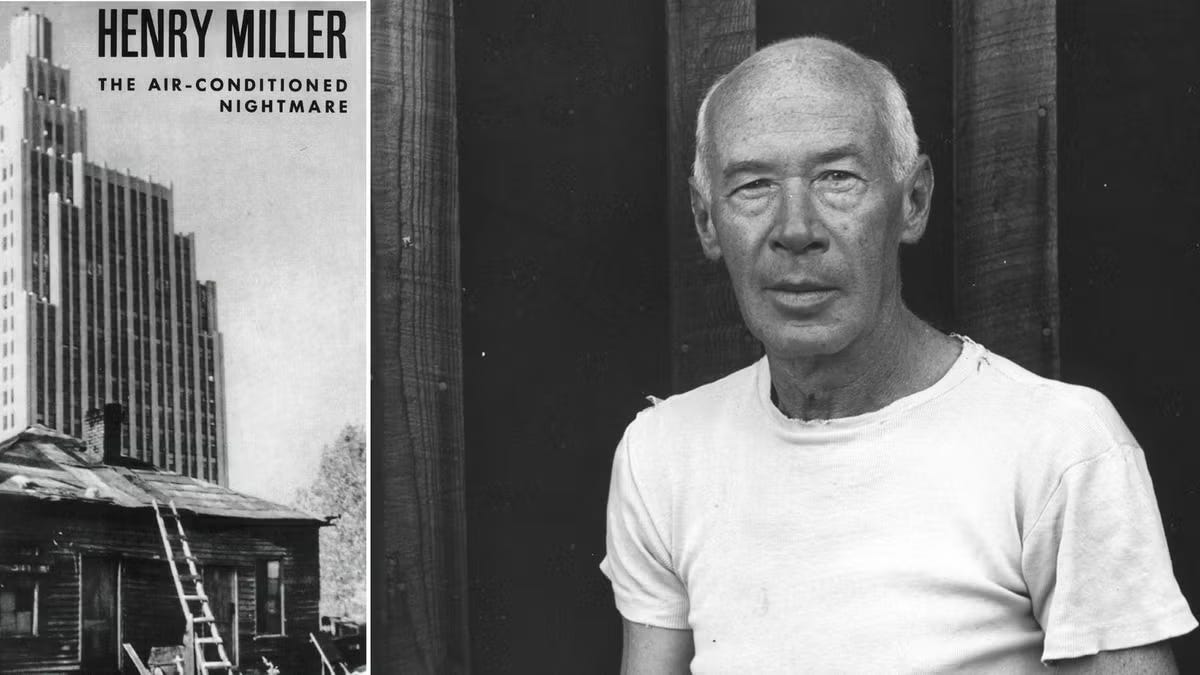
American short story writer and novelist Henry Miller (1891-1980) was one of the most controversial—and banned—writers of his time. He’s credited with breaking from existing literary forms to develop “a new type of semi-autobiographical novel that blends character study, social criticism, philosophical reflection, stream of consciousness, explicit language, sex, surrealist free association, and mysticism.”
That bold and innovative approach is what made him so popular and influential among the young generation of writers looking for new ways to write fiction. Among those he influenced are Richard Brautigan, Jack Kerouac, Norman Mailer, Philip Roth, Cormac McCarthy, Paul Theroux, and Erica Jong. Most of his books were banned in the US until 1961. His most famous books are Tropic of Cancer, Tropic of Capricorn, Black Spring, and The Rosy Crucifixion. [This list appears in Gotham Writers.]
My annotations appear directly under his bolded advice.
Work on one thing at a time until finished.
Writing students are always asking me if they can start a new novel or script while working on an old one. The answer is, as always, “You can do whatever you want. You’re the writer.” However, in general it is not a wise to work on more than one book at a time. That doesn’t mean you can’t write down ideas, notes, and even a dialogue exchange. It’s natural that when you’re knee-deep in a work you’re brain is much more alert and creative. It’s like a fire rushing through the forest ravenous for more fuel. I’m writing a novel right now and I have four new novel ideas and a concept for a play. I don’t actively think about them, but if an idea about them pops into my head, I write it down and file it for when I’m free to write it properly.
The deeper you get into a work, the more doubts you have. It’s always easier and more exciting at the beginning. When it becomes hard work and challenges you more, you want to abandon it for something shiny and new. Don’t. Finishing a novel requires focused thinking: when you’re walking, when you’re watching TV, when you’re driving. Your mind should be thinking about what comes next in your novel—not about your next novel.Start no more new books, add no more new material to Black Spring. (Apparently he’s giving himself this advice.)
See above.Don’t be nervous. Work calmly, joyously, recklessly on whatever is in hand.
If only. You can achieve calm only when you write on your work every day (or at least four days a week). That’s because the subconscious mind doesn’t want you to write because it knows it’s a source of anxiety. Therefore, it does everything to convince you not to write. It floods you with excuses and justifications: “I’m not inspired.” “I have family obligations.” “I’m too stressed.” (Believe me, I know them all and have used them.)
The best way to overcome that nagging, negative voice is to defy it and write anyway. Don’t judge the quality of your writing—just write. That’s what Miller means by “recklessly.” Fear of failure can make a writer feel small, and then write small. Be bold, be reckless, take chances. That’s the joyous part of being a writer.
That discipline will quiet the voice (it’s never really silenced). It’s like any other discipline—diet, exercise, etc.—that requires wrestling your demons to the ground. By doing it every day, regardless of your fears and excuses, you will admire your own commitment, write with more calmness—and you will actually produce pages.
Stick to your writing schedule. All other activities and appointments should be made around the writing schedule. Work according to the program and not according to mood. Stop at the appointed time!
By program, Miller means having a set schedule. Every professional writer knows that writing only when you’re in the mood or feeling inspired is a laughable recipe for disaster. It’s only when the writer pushes themselves past their comfort levels of “mood” do they go from “promising” writer to “accomplished” writer.
The secret to writing according to a strict schedule isn’t just the writing itself, but that it forces you to think about what you will be writing when you aren’t writing. That constant state of creativity makes the mind more aware of everything around it that might be used in your writing. So, when you sit down to write, you will already have ideas you’re ready to use.
Also, “stop at the appointed time” means that you should quit writing according to your schedule, even if you have more to write. The reasoning is good: If you stop in a place where you have more to say, when you start writing the next day, you will already have momentum. You’ll sit down and be off and writing.
I wish I’d followed this advice early in my writing career. There times I was so eager to finish my novel that I wrote all night, producing 20 or 30 pages at a sitting. Not only was the prose rushed and sloppy, but I didn’t give myself time to consider plot ideas that would have made the novel better. Rushing is just as bad as not writing.
However, there are times when you are writing and you have to follow through on an idea while it’s burning in your brain. Go ahead. But be judicious. Work an extra half hour and then shut it down until tomorrow.When you can’t create you can work.
You can see a common theme in Miller’s advice: Hard, consistent work is more important that waiting around for inspiration. Sometimes the writer is stuck about where to go next in the story, but that doesn’t mean there isn’t work to be done. Polishing prose. Selecting better word choices. Adding texture to the setting. And so forth. In fact, doing those things can often lead to you coming up with the solution that unsticks you.Cement a little every day, rather than add new fertilizers.
See #5 above.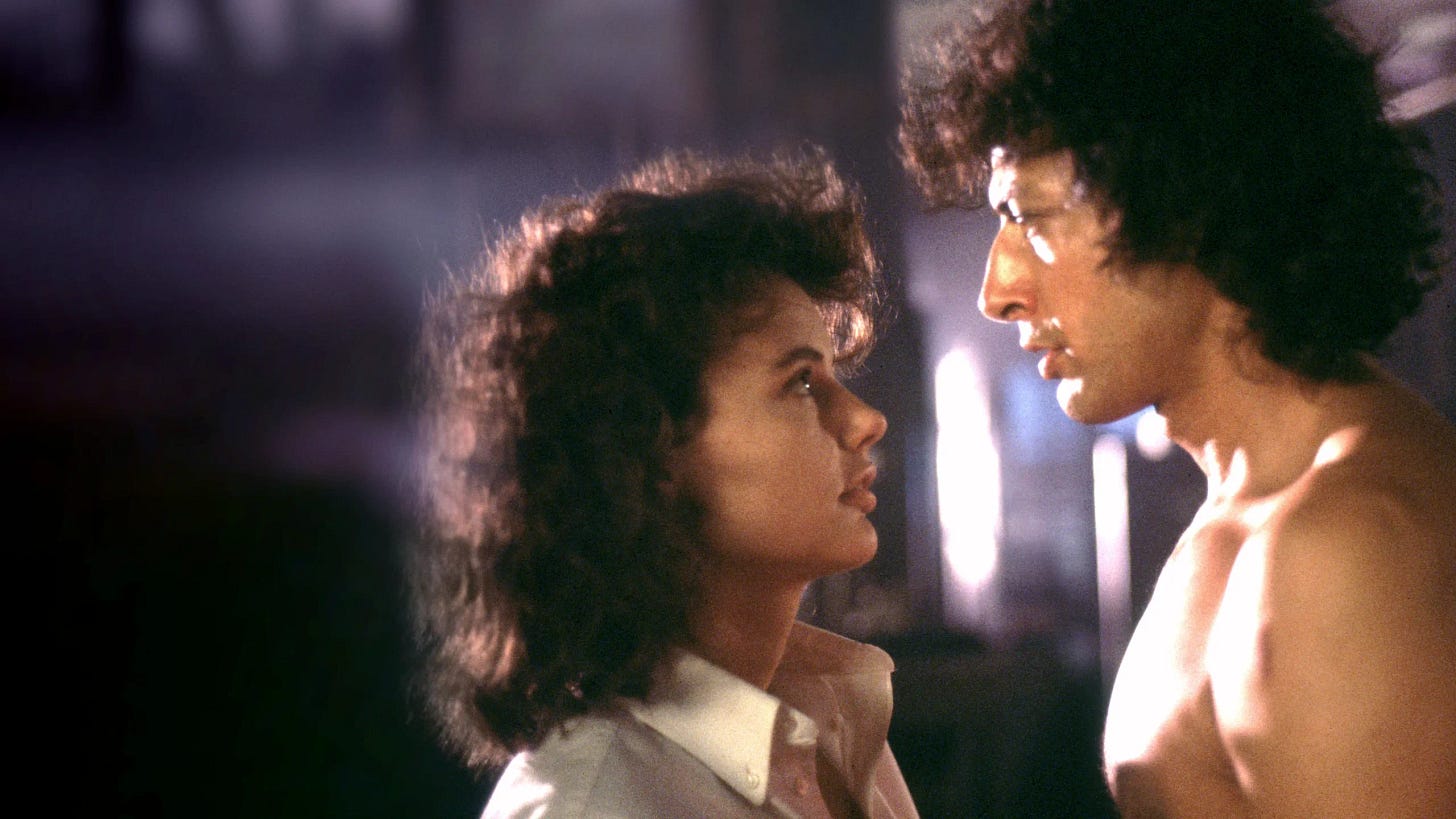
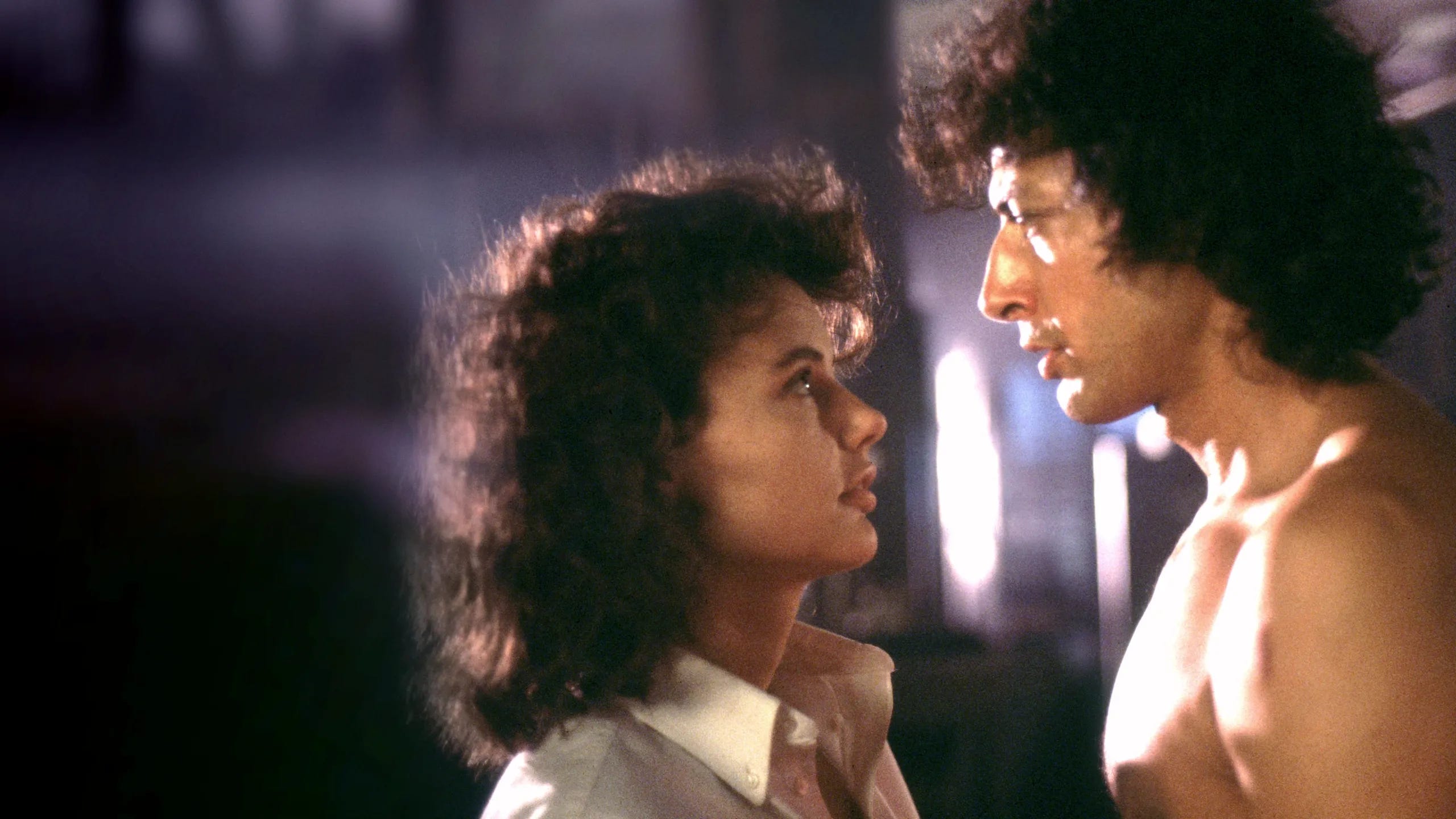
Geena Davis and Jeff Goldblum in The Fly, before everything goes to hell. Keep human! See people, go places, drink if you feel like it.
Young writers often romanticize the writing life as holing up in an attic, and clacking away on a keyboard, as if their fantasy life is somehow superior to real life. Well, in some ways it is. Sometimes when my writing is going well and I’m caught up in a complex plot and my characters are conversing with clever dialogue, going out into the real world feels bland. Why don’t real people speak with the same wit, intelligence, and humor as my fictional characters? Then I say myself: “Get over yourself!”
Mixing with people is when you discover the humanity, kindness, and compassion that we write about. In the 1986 film The Fly, the reason Jeff Goldblum was unable to transport flesh in his invention was because life was abstract to him. When he falls in love with Geena Davis and feels her flesh, he understands he was unable to transport humans because he lacked humanity. Writing isn’t an excuse to cut yourself off from people and life. If you do, then you really won’t understand people at all.
On the practical side, when I’m writing, my mind feels abuzz with the powers of observation. When I mix with people, or go to a movie, or play sports, I’m noticing everything, sieving through every physical detail, everything people do or say, plucking gems to use in my writing. My writing is richer because of my interaction.Don’t be a draught-horse! Work with pleasure only.
See #7.Discard the Program when you feel like it but go back to it the next day. Concentrate. Narrow down. Exclude.
Miller’s entire list of advice boils down to (1) work hard at writing through a consistent schedule and (2) don’t let the schedule become an obsession. Here he’s trying to tell us to recognize when we need a break from writing, but don’t use that as an excuse to keep you from writing. Take a day off every once in a while, but return to your schedule the next day. Otherwise, one day turns into several and then into many.Forget the books you want to write. Think only of the book you are writing.
This is so, so true. I’ve written about this previously, but it’s worth repeating. When you are consistently writing a book, your mind will open up. It’s as if you flipped a switch that allows the brain to see more colors, feel more emotions, think deeper thoughts. Ideas will keep flowing into your mind. You’ll have great ideas that will tempt you away from the book you are writing. These are the Siren songs and you need to be strapped to the mast like Odysseus in order to stay the course and not wreck your book.
I don’t ignore those ideas. I keep a file on each. I type notes on any thoughts I have, bits of dialogue, possible plot ideas. But then I return to the book I’m actually writing. Your mind and body want to lure you away so they can relax on the couch with the TV remote and a bag of corn chips. Resist! Stick to the schedule.Write first and always. Painting, music, friends, cinema, all these come afterwards.
Again, Miller is stressing the importance of staying with your writing schedule. He’s not saying that you should ignore friends or other activities and passions. He’s reminding us that writing a book requires discipline and not to let these other things distract you from your book. Once you have finished your writing for the day, go out and do all the things you want. But keep the writing schedule sacred. If a friend calls and says let’s go to the movies, you don’t abandon your schedule to comply.
Think of it this way: When you’re writing during your scheduled time, you’re performing life-saving CPR on a person. If you leave during that time, the patient dies.

5 Resources for Writers
3 Tips on Establishing Your Theme Throughout Your Screenplay
Poetry for an anxious world: 5 experts share poems of grief, hope and restoration
We only exist because of paid subscribers. Wouldn’t you like to be one of those?